
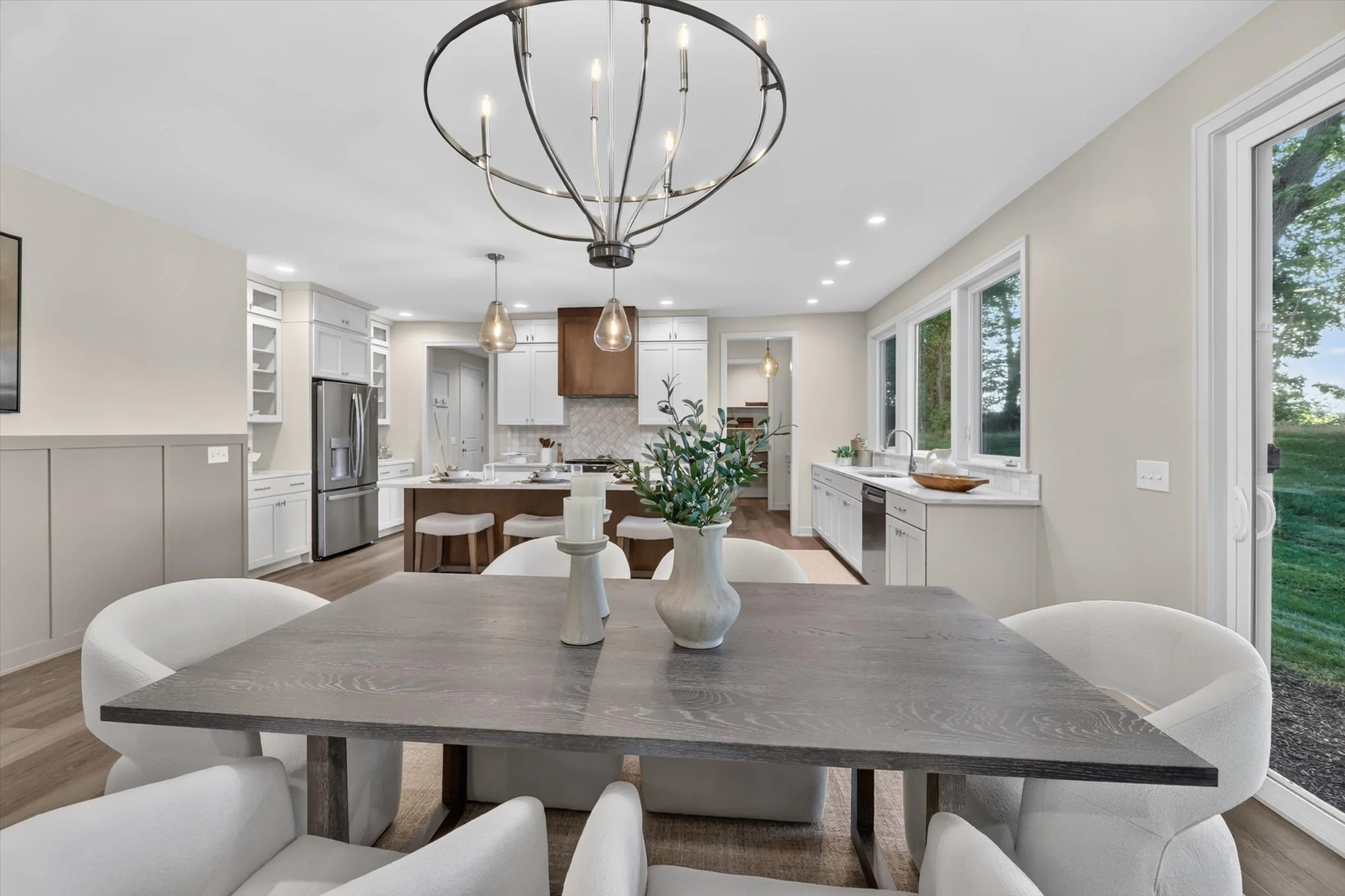
Request a virtual or in-person appointment to view under construction homes.
Cost & Financing
How much does it cost to build a custom home in the Kalamazoo area?
In the Midwest, the median contract price to build a new home on the owner's land was about $194 per square foot of finished space in 2025, or about $457,000 for the house alone, according to the U.S. Census Bureau. Those figures don't include the lot. Custom homes with larger floor plans, premium finishes or complex designs cost more.
Besides the house itself, budget for:
the land, if you don't already own it;
site work: excavation, the driveway, utility connections, or a well and septic system on rural lots;
permits and fees;
landscaping, and a finished lower level if it isn't in the base price.
Size, design complexity, finishes and the homesite move the price most. A one-story ranch usually costs more per square foot than a two-story home of the same size, because it needs more foundation and roof. Use a per-square-foot estimate early to test your budget, then rely on a fixed price once plans and selections are final.
Last reviewed November 2026
Is the price of a custom home guaranteed, and how do change orders work?
It depends on the contract. With a fixed-price contract, the builder commits to one price for the agreed plans and specifications. With a cost-plus contract, you pay the builder's actual costs plus a fee, so the final price can move. Either way, ask what's excluded. Conditions found below ground, such as poor soil or buried rock, are a common exception, and choices that go beyond an allowance (for flooring or lighting, for example) add to the price.
A change order is a written change to the plans after you sign. It should state the work, the price and any effect on the schedule, and you approve it before the work is done. Changes cost less the earlier they're made: moving a wall on paper is simple, while moving it after framing means redoing work. Setting aside a contingency for changes and upgrades you decide on during the build keeps surprises manageable.
How do construction loans work, and when do payments begin?
A construction loan pays for a new home in stages as it's built. You close on the loan before construction starts; then the lender pays the builder in installments, called draws, as work is completed and checked. During construction you usually pay interest only on the amount drawn so far, so payments start small and grow as the home takes shape. When the home is finished, the loan converts to, or is paid off by, a regular mortgage, and full principal-and-interest payments begin.
Lenders offer two common setups:
One-time close (construction-to-permanent): one application and one closing; the loan becomes your mortgage when the home is complete.
Two-time close: a short-term construction loan, then a separate mortgage that pays it off at completion.
If you're buying the lot as part of the project, it's often paid for at the construction-loan closing. Down payments, rates and terms vary by lender and loan program, so talk with a lender before design starts.
Last reviewed November 2026
How does financing work if I already own land?
Owning your land usually helps. Many construction lenders count the equity in land you own toward the down payment on a construction loan. If you still owe money on the lot, that balance is typically paid off when the construction loan closes. Because the loan is based on the finished home, the lender will want final plans and a builder's price before approving it.
Before design starts, ask your lender:
how they value your land: what you paid, or what it's worth now;
whether the loan can cover site work the lot needs, such as a driveway, utilities, or a well and septic system;
how long an approval stays valid while plans are finalized.
Last reviewed November 2026
Process & Timeline
How does the custom home building process work?
Building a custom home usually follows five stages:
Budget and financing. Set a realistic budget and, if you'll need a construction loan, get pre-approved.
Homesite. Choose land, or have the builder evaluate land you own, for slope, soil, utilities and local rules.
Design and selections. Develop the floor plan and exterior, then choose finishes such as cabinets, flooring and fixtures.
Pricing and contract. The builder prices the final plans and selections. You sign a contract, and the builder applies for permits.
Construction and closing. The home is built in phases, with building-department inspections and walkthroughs along the way, then a final walkthrough, closing and warranty service.
Design and pricing often take several months, and construction usually takes most of a year.
Can I use my own plans or architect when building a custom home?
Usually, yes. Most custom builders will build from plans you bring or work alongside your architect. Expect the builder to review the plans before pricing them, checking cost, how practical they are to build, local codes and how the home fits your homesite. They’ll suggest changes where something would be expensive to build.
If you don’t have plans yet, you can start from a builder’s existing floor plan and modify it, or design from scratch with the builder’s designers. Bringing finished plans can shorten the time it takes to get a price, because the design work is already done.
How will AVB keep me informed during construction?
During construction, AVB provides weekly updates through its building app, along with on-site walks and meetings with your AVB team, through your new home orientation.
How long does it take to build a custom home?
Expect roughly a year from building permit to move-in for a custom home, plus several months of design and pricing before that. Nationally, homes built by a contractor on the owner’s land took about 11.7 months from permit to completion in 2025, compared with about 7.4 months for homes built for sale. These figures come from the National Association of Home Builders’ analysis of Census Bureau data.
What changes the schedule:
Size and complexity: larger, more detailed homes take longer.
Design and pricing: plan revisions and selections add weeks.
Permits and site work, such as utilities or a well and septic system.
Weather: Michigan winters can slow excavation, foundations and exterior work.
Decisions: late selections and changes hold up ordering and trades.
If you need to move sooner, a new home that’s already under construction can cut months off the wait.
Last reviewed November 2026
When do I choose finishes when building a custom home?
Throughout the build, in the order the work needs them. Exterior choices such as siding, roofing, windows and colors come first. Next come items that must be ordered early or placed before drywall, such as cabinets, plumbing fixtures and the electrical layout. Flooring, lighting, hardware and paint colors usually come last.
Builders set a deadline for each group so materials arrive when the trades need them. Making choices on time keeps the schedule on track; late changes can delay work or add cost. Ask for a selections schedule at the start, and see samples in the builder's design studio or suppliers' showrooms before you decide.
Design & Customization
How customizable will my home really be?
It depends on how you build:
Custom home: designed around you from the start, from the floor plan and exterior to every finish, within your budget, the homesite and any neighborhood rules.
Semi-custom home: starts from a builder's existing plan, which you can change, often room sizes, layout details, the exterior and finishes.
Home already under construction: your choices depend on how far along it is. Before drywall, you can often still choose interior finishes; once it's finished, changes become remodeling.
Two things limit what's practical at any stage. Cost: changes get more expensive the later they're made. Structure: moving walls, windows or rooflines can affect engineering, permits or how the home fits the lot.
What's the difference between custom, semi-custom and spec homes?
The difference is how much is decided before you arrive:
Custom home: designed for one buyer from the start, often on land the buyer owns. The most choice and the longest timeline.
Semi-custom home: built from a builder's existing plan, changed to suit the buyer. Fewer decisions than custom, and usually a shorter design phase.
Spec home: designed and started by the builder before it has a buyer, so the plan and most finishes are already chosen. The least choice and the fastest move-in, sometimes right away.
Some builders also sell spec homes partway through construction, which lets a buyer choose some interior finishes and still move in sooner than with a custom build.
Can I change an AVB floor plan?
Yes. AVB's floor plans are starting points: if you like a plan but want changes, AVB can build a custom home based on it. Changes are priced before construction starts, and some depend on your homesite or community.
Buying Options
Should I buy a move-in-ready home, buy one under construction, or build a custom home?
Choose based on your timeline and how much you want to decide:
Move-in-ready: best when timing matters most. You can move in within weeks of signing, but the plan and finishes are already chosen.
Under construction: a middle path. You'll usually move in within a few months, and depending on the stage, you may still choose some interior finishes.
Custom build: best if you want the plan and every detail designed around you. Expect a year or more, with decisions throughout.
Financing differs too. Finished and nearly finished homes are usually bought with a regular mortgage, while a custom home on your own land usually needs a construction loan.
What is an AVB Showcase Home?
An AVB Showcase Home is a new home that AVB builds in its communities and sells while it's under construction or once it's complete, with professionally selected finishes and AVB design. Current Showcase Homes and their stage of construction are listed on AVB's Available Homes page.
Do I need a construction loan to buy a new home that's still being built?
Usually not. When a builder owns the land and the home until closing, you typically buy it with a regular mortgage once it's finished, after signing a purchase agreement and paying a deposit. The builder pays for construction in the meantime.
You need a construction loan when you're the one paying for construction as it happens, most often when building a custom home on land you own or are buying. If you're buying a home early in construction, ask the builder how deposits work, when the price is final, and when you'll need mortgage approval.
Last reviewed November 2026
Do I need a real estate agent to buy a new construction home?
No. You can buy a new home directly from the builder, whose sales team can walk you through homes, homesites and the purchase. Many buyers still bring their own agent to compare options, review the purchase agreement and negotiate on their behalf.
If you want an agent:
bring them to your first visit or tour, because many builders only work with agents who are involved from the start;
agree in writing on how your agent will be paid, and ask whether the builder contributes to buyer-agent compensation.
Should I build a new home or buy an existing home?
It comes down to price, time and how much you want to change. An existing home is usually faster to buy and may cost less up front. But older homes often need updates, and you may compete with other buyers for the best ones. A new home usually costs more at purchase, but you get a current floor plan, finishes you choose, lower energy and maintenance costs in the early years, and a builder's warranty.
New tends to make sense if you plan to stay a long time, want a layout that fits how you live, or want to avoid near-term projects like a new roof or furnace. An existing home may make more sense if you need to move quickly or want an established neighborhood with mature trees.
Home Types, Communities & Locations
Where should I live in the Kalamazoo area?
Start with your commute, the school district and the setting you want: in town, wooded, or near a lake. Around Kalamazoo:
Portage, just south of Kalamazoo, is a city served mostly by Portage Public Schools.
Richland, northeast of Kalamazoo near Gull Lake, is largely served by Gull Lake Community Schools.
Texas Township, west of Portage, is split among four school districts (Mattawan, Portage, Kalamazoo and Schoolcraft), so check each address.
Vicksburg, a village south of Portage, is served by Vicksburg Community Schools.
The City of Kalamazoo is served by Kalamazoo Public Schools. Students who live in the district, attend its schools for at least all of high school and graduate can qualify for the Kalamazoo Promise, which pays up to 100% of tuition and fees at eligible Michigan colleges and trade schools.
School boundaries don't always follow city or township lines, so confirm the district for any address you're considering.
Last reviewed November 2026
What is the difference between a condo, townhome, and single-family home?
The difference is mostly what you own and what you take care of:
Single-family home: a detached house on its own lot. You own both and handle all upkeep, inside and out.
Townhome: a home that shares one or more walls with its neighbors, often on two or more floors. Depending on how the community is set up, you may own the land under your home or a condominium unit, and an association often maintains the exterior and grounds.
Condominium: you own your home plus a share of the community's common areas, such as grounds, roads and amenities. An association maintains those areas, paid for by monthly fees.
In Michigan, many neighborhoods of detached homes are legally "site condominiums": each home and its lot form a condominium unit, and an association owns and maintains shared areas such as roads or open space. Before you buy, read the association's documents to see exactly what you own and what the fees cover.
What do HOA and condo association fees usually cover?
Association fees pay for what the community shares, so coverage depends on the type of community:
Condominium and townhome communities often cover exterior maintenance, lawn care, snow removal, insurance on common areas, and savings (reserves) for future repairs.
Neighborhoods of detached homes usually charge less and cover common areas and entrances, and sometimes lawn care or snow removal.
The association's governing documents and annual budget spell out what's included, how fees can change, and what owners maintain themselves. Ask for both before you buy.
Can I build a custom home on land I already own?
Usually, yes. Most custom builders build on land their clients own. What matters is the site:
slope and soil, which affect the foundation and whether a walkout lower level is possible;
utilities: public water and sewer, or the need for a well and septic system;
access, including the length and cost of the driveway;
zoning, setbacks and any neighborhood or association rules.
Have a builder walk the land with you before design starts, or before you buy a lot if you haven't yet. Site conditions can add a lot to the budget, and an experienced builder can spot them early.
What are walkout, daylight, and patio lower levels?
They describe how much of a home's lower level sits above ground, which depends on the slope of the homesite:
Patio site: the lower level is fully below ground, with egress windows, and the main floor opens onto a patio.
Daylight site: like a patio site, with small windows that bring natural light into the lower level.
Garden level: the lower level is about half above ground, with large windows but no door to the outside.
Walkout: the back of the lower level is fully above ground, with a door to the backyard, usually with a patio below and a deck above.
Patio sites are usually the most cost-efficient; walkouts give the lower level the most light and outdoor access. Terms vary from builder to builder, so ask how each homesite you're considering is classified.
AVB Communities at a Glance
| Community | Location | Home Type | School District | Starting Price |
|---|---|---|---|---|
| McConley Cove | Portage | Single Family | Portage Public Schools | $500K+ |
| The Enclave | Kalamazoo | Townhome | Kalamazoo Public Schools | Investment values from the mid $400's |
| The Beachwoods | Portage | Single Family | Portage Public Schools | Starting from the $500's |
| The Ridge at Tamarron | Richland | Single Family | Gull Lake Community Schools | Starting from the $600's |
| The Ranch at Hidden Lake | Richland | Single Family | Gull Lake Community Schools | Investment values from the mid $600,000's |
| Hidden Lake | Richland | Single Family | Gull Lake Community Schools | Investment values from the mid $600’s |
| Eagles Nest | Richland | Single Family | Gull Lake Community Schools | Investment values from the high $400's |
| Meadowshire | Richland | Single Family | Gull Lake Community Schools | Investment values from the mid $400's |
| The Groves at 28th | Richland | Single Family | Gull Lake Community Schools | Investment values from the high $400's |
| Turning Stone | Texas Township | Single Family | Mattawan Consolidated Schools | Investment values from the mid $600's |
| Barrington Shores | Texas Township | Single Family | Mattawan Consolidated Schools | Investment values from the $700’s |
| Walden Woods | Kalamazoo | Condominium | Kalamazoo Public Schools | Investment values from the $400’s |
| Bridgeview at Angels Crossing | Vicksburg | Condominium | Vicksburg Public Schools | Investment values from the $400’s |
| Wild Plum | Portage | Single Family | Portage Public Schools | Starting from the $500's |
Quality, Warranty & Service
How can I tell whether a builder delivers quality construction?
Look for evidence rather than adjectives. Before you sign with any builder:
License and insurance: confirm a current Michigan residential builder license with the state Department of Licensing and Regulatory Affairs (LARA), and ask for proof of liability and workers' compensation insurance.
Homes you can see: walk through finished homes and, if possible, one under construction, where framing and workmanship are still visible.
Reviews and references: read recent reviews, and talk with buyers from the past few years about communication, schedule and service after move-in.
Inspections: ask when the building department inspects, which walkthroughs the builder holds with you, and whether you can bring your own inspector.
Warranty: read the written warranty, and ask how service requests are handled and how quickly.
The contract: make sure it spells out the price, what's included and how changes are handled.
Is AVB licensed and insured, and how are liens prevented?
Yes. AVB holds a current builder's license and carries general liability and workers' compensation insurance, and copies are available on request. AVB keeps agreements and current insurance on file for its trade contractors and suppliers, and collects lien waivers for the work on each home, so homeowners are protected from liens.
What inspections happen during construction?
In Michigan, the local building department inspects a new home at set stages. These typically include the footings and foundation, framing, rough electrical, plumbing and mechanical work, insulation, and a final inspection before the home can be occupied. Each must pass before work moves on.
Many builders also walk the home with buyers at key points. One is before drywall, when wiring and plumbing are still visible; another is a final walkthrough before closing. Some buyers hire their own inspector for those same stages. Ask the builder about access and scheduling first.
What is covered after closing if something goes wrong with a new home?
Most new homes come with the builder's written limited warranty. A common structure is one year for workmanship and materials, two years for the plumbing, electrical and heating and cooling systems, and up to ten years for major structural defects, though terms vary by builder. Appliances and many products, such as roofing, windows and flooring, carry their own manufacturer warranties.
Builder warranties typically don't cover normal wear, routine maintenance, damage from weather or neglect, or small cracks from settling. If something goes wrong, report it to the builder in writing before the warranty period ends, and keep copies. Many builders also schedule a walkthrough a few months after move-in, and another before the first year of coverage ends.
Last reviewed November 2026
How energy efficient is a new AVB home?
AVB homes are consistently built 30% to 50% more energy efficient than required by the latest energy codes, and AVB builds Energy Star, Green Built and HERS-rated and certified homes.
